2 Aug 2026 — first EU AI Act transparency obligations apply. Counting down.

One registry for every AI disclosure record.

MCX is the neutral place AI providers publish their EU AI Act disclosures and deployer organisations retrieve them. Real operational software — registry, records, version history, and change alerts in one place.

Real operational software, not a mockup.

Every screen below is a real surface in the MCX registry — the disclosure registry, an individual record, immutable version history, and the API tokens and webhook endpoints that drive retrieval.
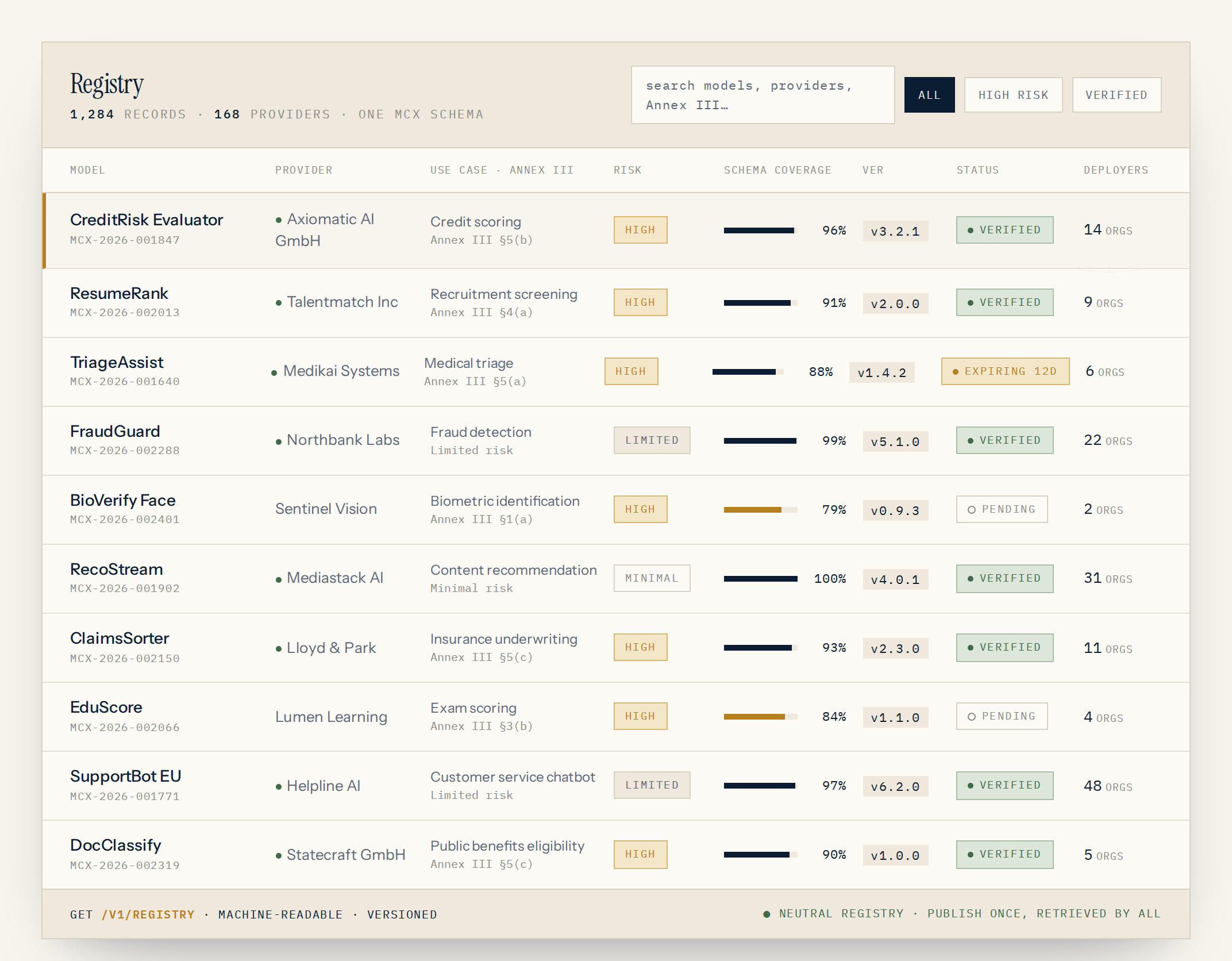
The MCX disclosure registry — models across providers with risk class, schema coverage, version, verification status, and deployer counts
Disclosure registry
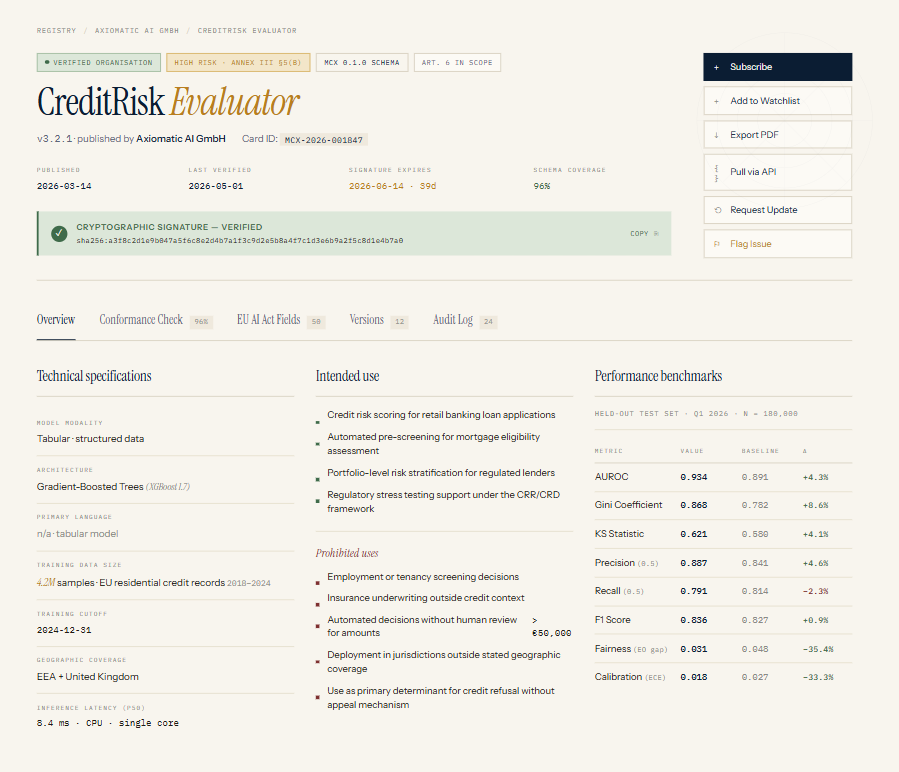
A disclosure record in MCX — CreditRisk Evaluator: verified organisation, high-risk Annex III §5(b), cryptographic signature, technical specifications, intended and prohibited uses, and performance benchmarks against baseline
Disclosure record
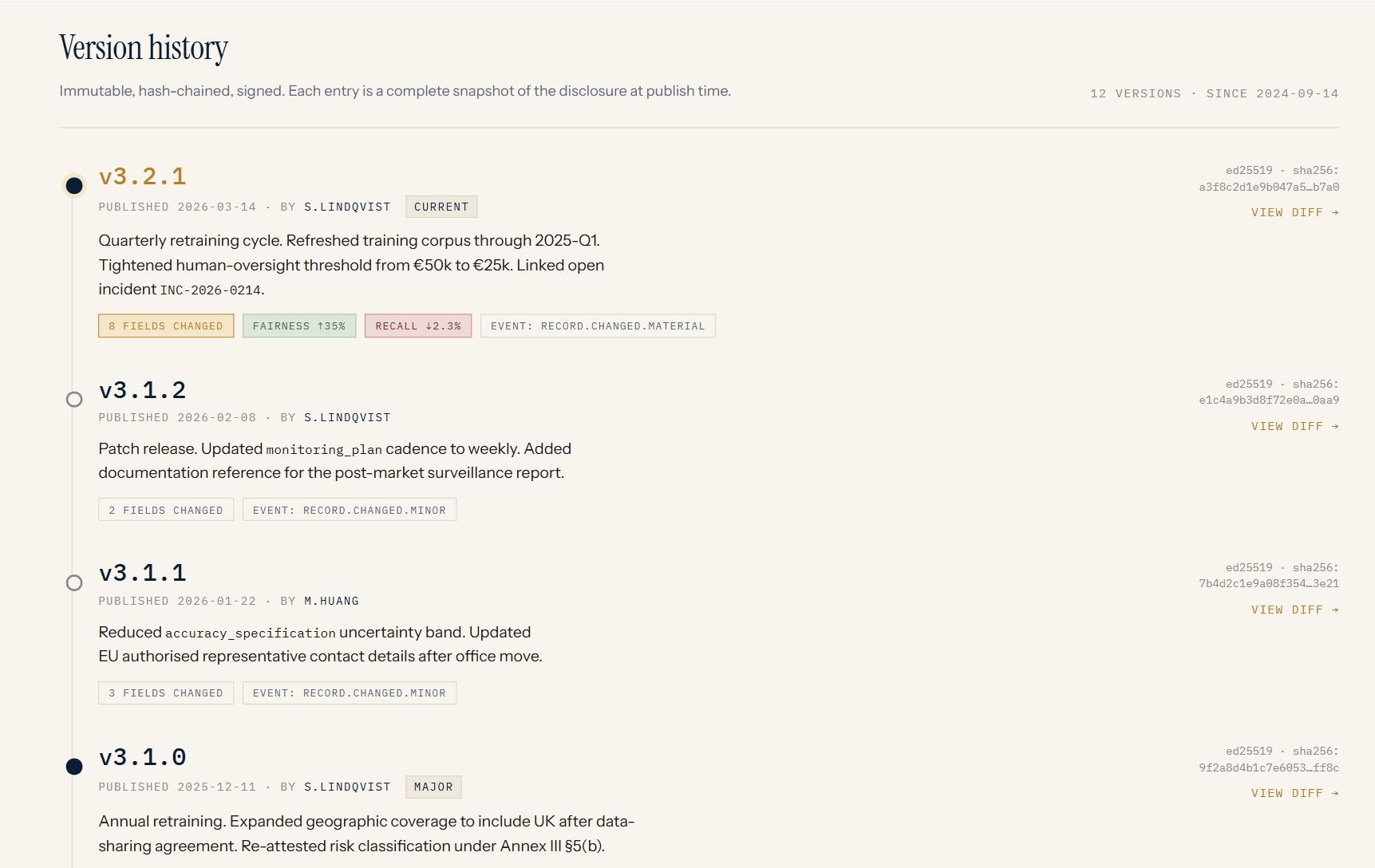
Version history for a disclosure — immutable, hash-chained, signed entries showing fields changed, fairness and recall deltas, and per-version event types
Version history — immutable & hash-chained
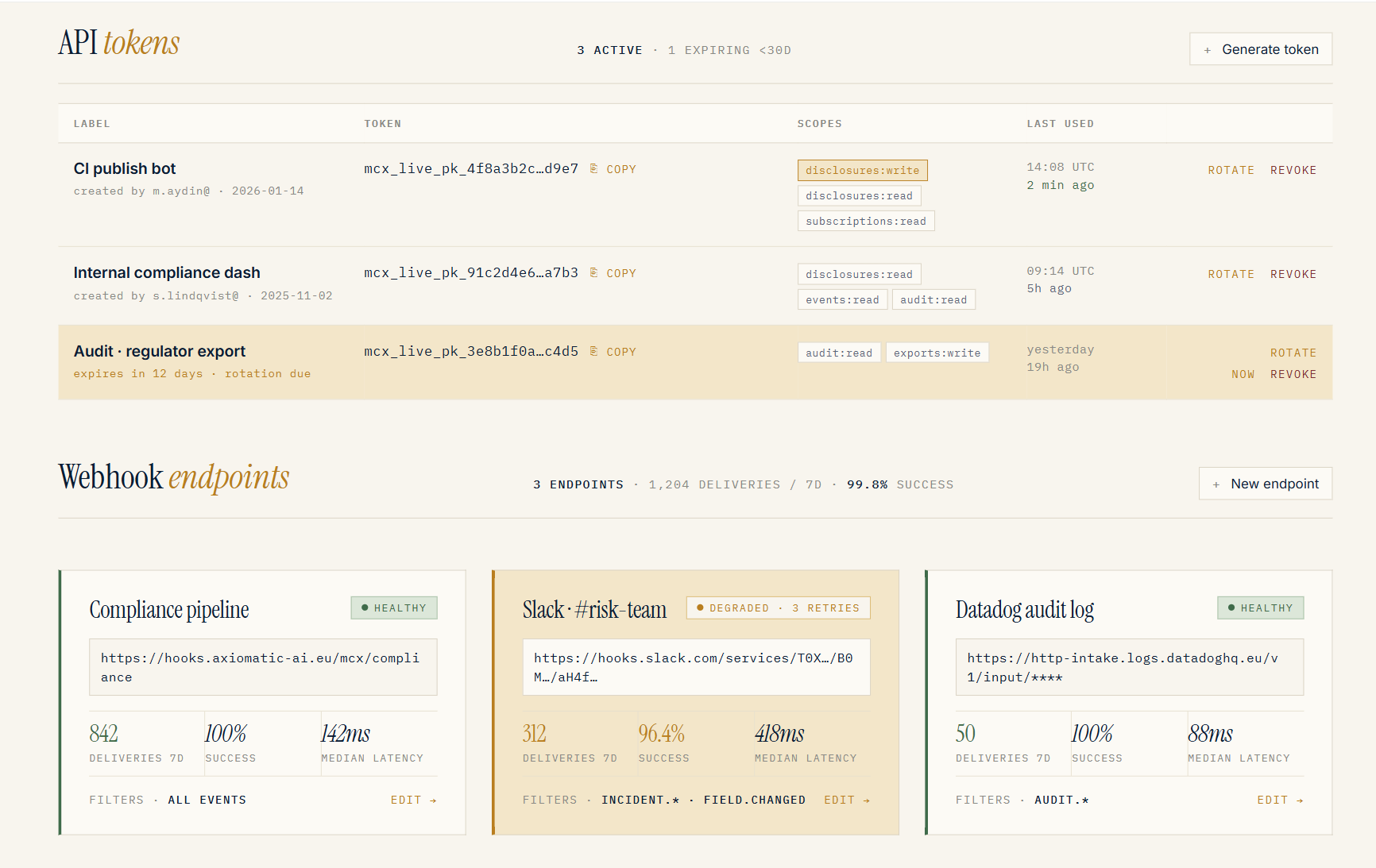
API tokens and webhook endpoints in MCX — scoped tokens with rotation, and webhook delivery health across compliance, Slack, and Datadog endpoints
API tokens & webhook delivery

The whole platform, nothing more.

Every feature traces back to one of these five. Anything that doesn't is out of scope.

01
Registry
The canonical source of disclosure records — one neutral place both sides reference.
02
Schema
A standardised structure for every disclosure, mapped to EU AI Act articles.
03
Versioning
Every change tracked with full, tamper-evident history for audit evidence.
04
Retrieval
Machine-readable records pulled into existing GRC and procurement tools.
05
Change alerts
Real-time notifications fire the moment a record materially changes.

See how one record flows end to end.

Provider publishes once. Deployer subscribes. An alert fires on every material change.